
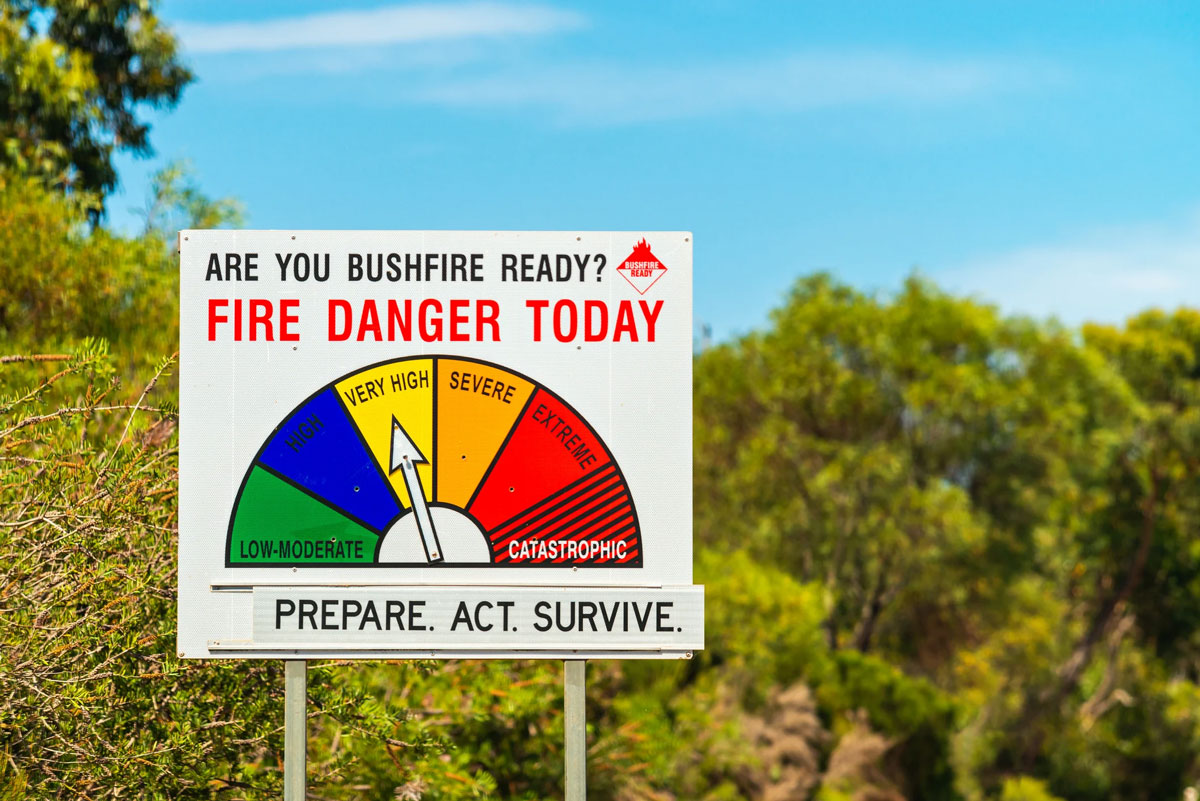
In what feels like a distant memory, last season’s bushfires ravaged the country – destroying billions of dollars worth of facilities. Longer and more destructive bushfire seasons are here to stay. Climate change is contributing to the acceleration of severe bushfires and asset protection and building maintenance needs to be top of mind for building owners to reduce the risk of drastic asset loss.
Building regulations for fire safety
The Building Code of Australia details the minimum design criteria for fire safety measures in a building. The main goal of these regulations is to ensure that a site’s Available Safe Egress Time (ASET) is greater than the Required Safe Egress Time (RSET). ASET is the time it takes from fire ignition for conditions to become untenable. RSET, on the other hand, is the time it takes from fire ignition for occupants to reach safety, i.e. an external area of the building or a protected exit. If any part of building’s fire safety measures are impaired, this can reduce the gap between ASET and RSET and put occupants at risk.
Each state and territory individually legislates the requirements to maintain fire protection systems and equipment. AS1851-2012 is generally used as the Australian standard when maintaining fire safety systems and associated equipment, but there are still regulatory differences to be found across the country. The list below details the acts and regulations of each state and territory that legislate the maintenance required for essential life safety measures:
| State / Territory | Building Act | Building Regulation |
|---|---|---|
| NSW | Environmental Planning and Assessment Act 1979 | Environmental Planning and Assessment Regulations 2000 |
| ACT | Emergencies Act 2004 | ACT Fire Brigade Policy FS-05 – Essential Safety Maintenance |
| NT | Fire and Emergency Act | Fire and Emergency Regulations |
| QLD | Fire Services 1990 | Building Fire Safety Regulations 2008 |
| SA | Development Act 2004 | Development Regulations 1993 and Ministers Specifications South Australia 76 |
| TAS | Building Act 2000 | Building Regulation 2004 amended 2013 |
| VIC | Building Act 1993 | Building Regulations 2018, Regulations 223 and 224 |
| WA | Building Act 2011 | Building Regulation 2012, Building Amendment Regulations |
Five important considerations to keep assets safe are listed below:
- Each state has its own set of guidelines and a building code to help mitigate and protect against fire damage. Additional requirements are in place for bushfire prone areas. The main purpose of building and fire codes is to ensure the quality and safety of facilities, inclusive of bushfire protection. These codes set the minimum requirements to safeguard the occupants of a building and to protect the building structure from various threats and exposures. Fire technicians are best placed to advise on how to comply with building codes.
- Timely maintenance and fire risk assessments are often overlooked by building owners. It is critical that a fire technician regularly inspects both the building and equipment to protect people in the event of a fire. Assessments should be undertaken every 12 months. They typically cover the building’s construction, layout and use; electrical equipment; smoking areas; defense against arson and protection from fires that are caused by lighting.
- Prepare a bushfire mitigation strategy which should include determining bushfire risk and hazards, reducing fuel loads, increasing safety, fulfilling legislative requirements and promoting best practice for employee safety.
- Build employee awareness and skillsets through fire training safety programs. They are a vital step towards protecting employees. Each employee should be familiar with emergency procedures in the workplace. Designating an internal safety officer should also be part of the overall fire protection plan.
- Implement a passive fire protection strategy that reviews structural components such as structural steel and joint systems; compartmentation: i.e., fire barriers, firewalls, fire partitions and smoke barriers; and open protection: i.e., fire doors and windows. These measures are the first barrier against an external fire, it is critical flammable items which act as fuel are removed and disposed of regularly to ensure the passive systems are able deliver the protection required as designed.
Building in a bushfire prone area
When buying property in designated bushfire prone areas, building owners must follow the minimum construction standard applying to all new residential buildings, hospitals, child care centres, schools, and associated buildings. A bushfire hazard assessment is required to determine the bushfire attack level for the area, which will be followed by its corresponding national bushfire construction standards.
Construction requirements
Building and planning regulations vary in each state and territory. Find your location below and see what regulations apply to you. If you need more information, contact your local council for further clarification.
Australian Capital Territory actmapi.act.gov.au/
New South Wales planningportal.nsw.gov.au/spatialviewer/#/find-a-property/address
Queensland ruralfire.qld.gov.au/Bushfire_Planning/Pages/default.aspx
South Australia sa.gov.au/topics/planning-and-property/land-and-property-development/building-rules-regulations-and-information/bushfire/building-or-developing-in-bushfire-prone-areas
Tasmania fire.tas.gov.au/Show?pageId=colBushfireProneAreas
Victoria mapshare.vic.gov.au/vicplan/
Western Australia dplh.wa.gov.au/planwa
NSW
Building Act:
Environmental Planning and Assessment Act 1979
Building Regulation:
Environmental Planning and Assessment Regulations 2000
Annual Compliance Certificate:
Annual Fire Safety Statement (AFSS) Measure: Essential Fire Safety Measures
In New South Wales it is a requirement for the fire safety system to be submitted annually to the local Council and the NSW Fire Brigade to prove essential fire safety measures within a building have been maintained to Australian Standards and Regulations over the past 12 months as installed.
ACT
Building Act:
Emergencies Act 2004
Building Regulation:
ACT Fire Brigade Policy FS-05 – Essential Safety Maintenance
Measure:
Active Fire Safety Systems and/or Essential Services
In the Australian Capital Territory under the Australian Standards and Work Health and Safety Regulations, it is the responsibility of the owner to ensure active fire safety systems are maintained as required.
NT
Building Act:
Fire and Emergency Act
Building Regulation:
Fire and Emergency Regulations
Measure:
Building Fire Safety Measures
In the Northern Territory a Yearly Condition Report must be made available within 48 hours for inspection in accordance with AS1851.
QLD
Building Act:
Fire Services 1990
Building Regulation:
Building Fire Safety Regulations 2008
Annual Compliance Certificate:
Occupier’s Statement
Measure: Fire Safety Installations
In Queensland it is a requirement for the occupier’s statement to be submitted annually to the Fire Services Commissioner by the owner or occupier to show fire safety installations within a building have been maintained to Australian Standards and Regulations over the past 12 months.
SA
Building Act:
Development Act 2004
Building Regulation:
Development Regulations 1993 and Ministers Specifications South Australia 76
Annual Compliance Certificate:
Schedule 16, Form 3
Measure:
Fire Safety Provisions
In South Australia it is a requirement for the Form 3 to be submitted annually to the local building authority to show essential safety provisions within a building have been maintained to Australian Standards and Regulations over the past 12 months in accordance with Essential Safety Provisions Schedule 16 Form 1.
TAS
TAS Building Act:
Building Act 2000
Building Regulation:
Building Regulation 2004 amended 2013
Annual Compliance Certificate: N/A
Measure: Essential Safety and Health Measures
In Tasmania it is the responsibility of the owner to ensure all essential safety and health features/measures are maintained and serviced to the current regulations as per the building’s design. A Safety Measures Report may be issued on an annual basis to ensure Australian Standards and Regulations are being met.