
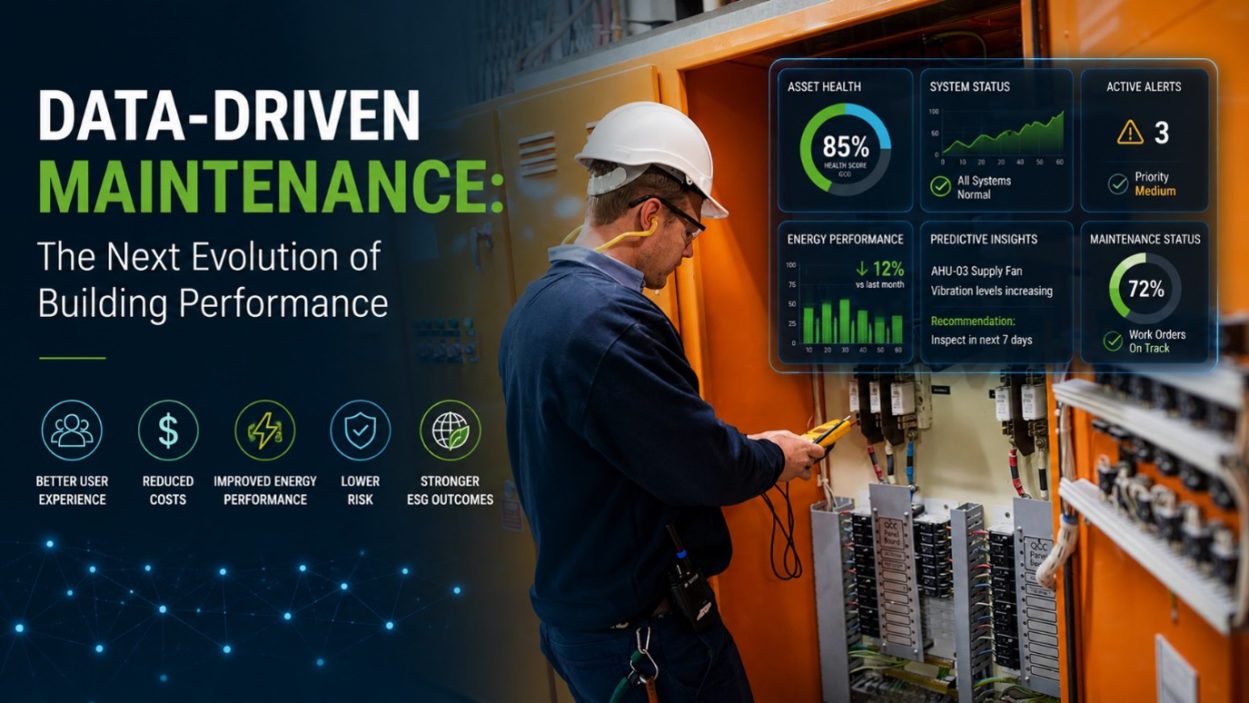
Building owners and managers are under increasing pressure to reduce operating costs, improve sustainability outcomes, maintain compliance and deliver a better experience for occupants.
At the same time, modern buildings are becoming more complex. HVAC systems, electrical infrastructure, building management systems, fire services, water systems and smart technologies are generating more operational data than ever before.
Moving Beyond Reactive Maintenance
For many organisations, maintenance has traditionally been reactive. Equipment fails, occupants notice a problem, a complaint is raised, and a technician responds.
While this approach resolves immediate issues, it often means building performance has already been impacted. Occupants may experience discomfort, assets may operate inefficiently, and unexpected breakdowns can result in higher costs and increased operational risk.
Data-Driven Maintenance takes a different approach. Rather than waiting for failures to occur, building performance data is used to identify abnormal behaviour, emerging faults and performance trends before they become major issues. The result is a more proactive maintenance strategy that helps support reliability, compliance and operational continuity.
What Building Owners Really Want
Regardless of building type, most owners and facility managers are focused on achieving the same core outcomes.
Better Occupant Experience
People expect buildings to be safe, comfortable and reliable. When critical building systems perform consistently, occupant satisfaction improves and disruptions are reduced.
Reduced Operating Costs
Emergency repairs and unplanned downtime are often far more expensive than planned maintenance activities. Identifying issues earlier allows maintenance resources to be prioritised more effectively while helping to avoid costly failures.
Improved Energy Performance
Building systems account for a significant proportion of operational energy consumption. Data insights can help identify inefficiencies, excessive runtime, control issues and opportunities to improve energy and water performance.
Lower Operational Risk
Unexpected asset failures can create compliance, safety and business continuity concerns. Proactive maintenance helps reduce these risks by identifying developing issues before they impact building operations.
Stronger Sustainability Outcomes
As ESG expectations continue to grow, organisations are looking for practical ways to improve environmental performance. More efficient building systems, reduced waste and better asset performance all contribute to long-term sustainability objectives.
Turning Data Into Action
Modern buildings generate information from a wide range of systems, including:
- HVAC systems
- Building Management Systems (BMS)
- Electrical infrastructure
- Lighting and controls
- Fire and life safety systems
- Water systems
- Energy monitoring systems
- Vertical transport
- Smart building technologies and IoT devices
However, data alone does not improve building performance. The value comes from understanding what the information is telling us and translating those insights into meaningful maintenance actions.
When this process is applied effectively, maintenance activities become more targeted, more efficient and more impactful.
The Rise of Blended Maintenance
One of the most significant developments in the building services industry is the emergence of blended maintenance models. These models combine:
- Skilled on-site technicians
- Analytics platforms
- Automated fault detection
- Remote monitoring
- Specialist support services
Technology is not replacing maintenance teams. Instead, it is giving technicians better visibility of asset performance, allowing them to identify issues sooner, prioritise work more effectively and focus on activities that deliver the greatest value.
By combining people, technology and data, building owners gain a clearer understanding of asset health and can make more informed decisions about maintenance priorities.
From Reactive Responders to Building Performance Specialists
Perhaps the most exciting aspect of Data-Driven Maintenance is the way it is transforming the role of maintenance teams. Rather than simply responding to faults after they occur, technicians can use data to identify trends, investigate potential issues and support long-term asset performance.
The result is a more strategic approach to maintenance — one that helps organisations reduce risk, improve reliability and achieve better outcomes across their building portfolios.
Looking Ahead
Buildings are becoming increasingly connected, and the volume of operational data will continue to grow. The organisations that successfully leverage this information will be better positioned to improve performance, reduce operating costs, support sustainability objectives and create more reliable environments for occupants.
The future of maintenance is not about collecting more data. It is about turning data into action. And for building owners and managers, that shift has the potential to redefine building outcomes.